
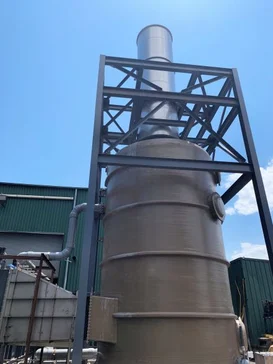
Wet Scrubber Systems
A wet scrubber is the generic name for a control device that uses the process of absorption to separate pollutants from an exhaust gas stream.
What is Absorption?
Absorption is a physical or chemical process that removes a pollutant from a gas phase by dissolving it into a solvent media. The solvent is most commonly a liquid, but can be a dry bulk solid in certain systems. The absorbing material is called the solvent, and the gas being absorbed is called the solute.
Acid Gas Scrubbing
Acid gas scrubbing is one of the most common industrial applications for a wet, packed tower scrubber. An acid gas scrubber controls exhaust emissions resulting from oxidizing halogenated compounds such as HCl, H₂S, and SO₂, which may form acid gases during oxidation in a thermal oxidizer.
Packed Bed Scrubber
The most common type of wet scrubber is a packed bed counterflow scrubber. Other designs include crossflow scrubbers, bubble plate scrubbers, tray scrubbers, and more sophisticated proprietary configurations.
How It Works (Crossflow Scrubber Example)
In a typical crossflow wet scrubber:
- The exhaust gas stream containing pollutants enters at the bottom and flows upward toward the exhaust outlet.
- Random packing provides surface area to distribute the liquid solvent and maximize gas-liquid contact.
- The liquid scrubbing media (solvent) enters near the top and is distributed over the packing, absorbing pollutants from the gas phase.
- The liquid collects in the sump for recirculation or treatment.
- Before exiting, the gas passes through a mist eliminator to remove entrained droplets.
Water is the most common scrubbing fluid, but other solvents may be required depending on the pollutants. Absorption equilibrium—the relationship of pollutant solubility in the scrubbing fluid—determines scrubber performance.
Advantages of Wet Scrubbers
- Low capital and installation costs
- Simplicity of design and operation
Limitations and Considerations
- Pollutant Removal Efficiency: For many VOCs, maximum removal efficiency may only reach 90% due to absorption equilibrium limitations.
- Scrubbing Liquid: While water is low-cost, modified solvents increase chemical costs and system complexity.
- Byproducts: Wet scrubbers transfer air pollution to a water pollution control problem. Wastewater treatment or discharge must be carefully evaluated.
- Maintenance: Generally low for organic pollutants, but particulates or biological impurities can cause plugging, growth, and pump/pipe degradation.
Typical Applications
- Acid gas control (HCl, H₂S, SO₂)
- Chemical processing
- Industrial exhaust streams with soluble pollutants
- Post-oxidation treatment for halogenated compounds
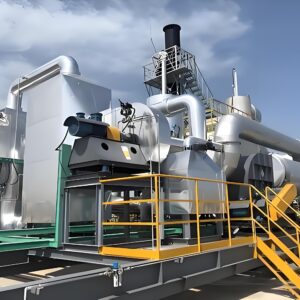
CPI offers custom-engineered wet scrubber systems, including packed tower and crossflow designs, integrated with your existing emission control equipment.
评价
目前还没有评价