
Enabling Clean Production™
in the Automotive Industry
The automotive industry routinely applies a variety of solvent based coatings across many different processes, generating significant emissions of volatile organic compounds (VOCs) and Hazardous Air Pollutants (HAPs). The most common VOC abatement technology for the automotive industry is a Regenerative Thermal Oxidizer (RTO). RTOs provide the most cost effective control for these applications.
VOC Emission Control Applications
Paint Shop & Finishing Systems
Complete VOC control for automotive paint booths, primer, basecoat, and clearcoat applications.
Electric Vehicle Battery Production
VOC emission control from battery cell manufacturing, electrode coating, and assembly processes.
Engine Dynamometer Testing
Exhaust capture and treatment from engine test cells and dynamometer facilities.
Surface Coating Applications
Control of VOCs from various surface coating lines, including plastic parts and metal components.
Composite & Carbon Fiber Manufacturing
Treatment of emissions from resin curing, lamination, and composite forming processes.
Tire & Rubber Curing Emissions
Abatement of VOCs and odors from tire vulcanization and rubber compounding.
Parts Heat Treating & Curing
Emission control from heat treatment furnaces, curing ovens, and thermal processing.
Additional Segments
For other automotive manufacturing processes, contact our engineering team.
Featured Installations & Applications
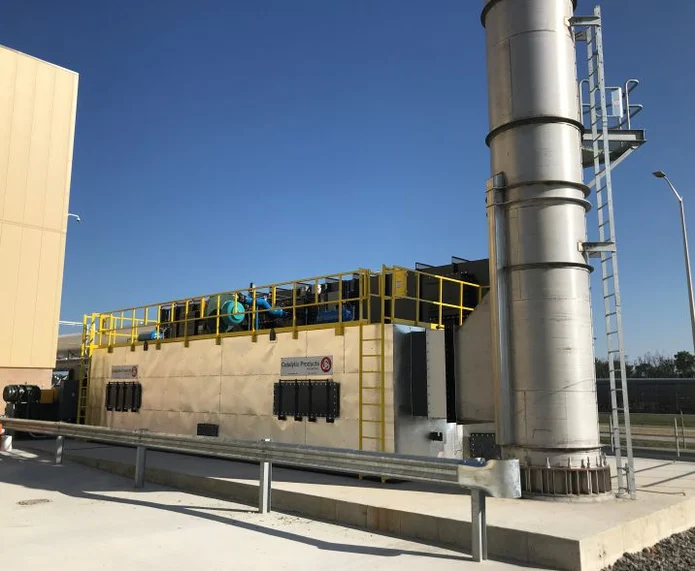
RTO system for automotive paint shop – 60,000 SCFM capacity

Emission control for EV battery manufacturing lines

Tire curing and rubber emissions abatement solution
Why RTO for Automotive?
Regenerative Thermal Oxidizers (RTOs) achieve destruction efficiency up to 99%+ with thermal efficiency up to 97%, making them ideal for high-volume, variable VOC loads common in automotive painting, coating, and battery production. Their energy recovery significantly reduces operating costs compared to other technologies.
For additional segments in the Automotive Industry
Custom solutions for your specific process