
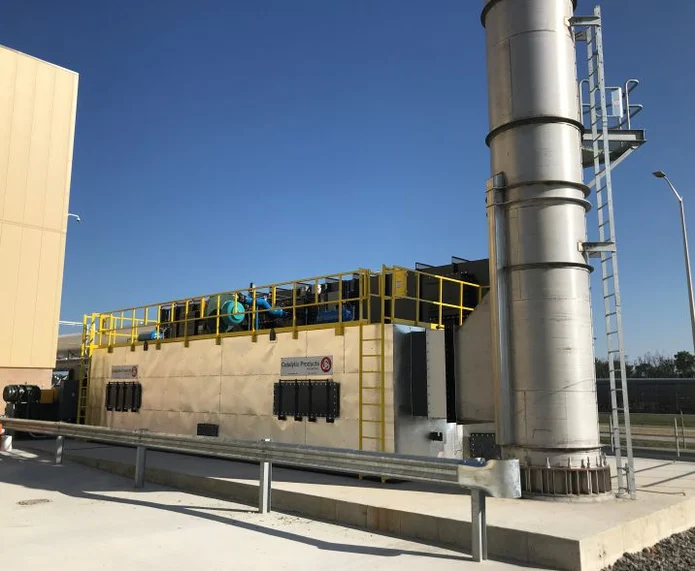
In the modern industrial landscape, environmental compliance is no longer optional. As regulatory bodies like the EPA tighten restrictions on Volatile Organic Compounds (VOCs) and Hazardous Air Pollutants (HAPs), manufacturers are turning to advanced abatement technologies. Among these, the Regenerative Thermal Oxidizer (RTO) stands out as the gold standard for high-efficiency air pollution control. But how exactly does an RTO system work, and why is it the preferred choice for large-scale industrial operations?
Understanding the Core Principles of RTO Technology
A Regenerative Thermal Oxidizer is an industrial-grade system designed to destroy air pollutants through the process of thermal oxidation. At its simplest, it “burns” pollutants at extremely high temperatures, converting them into harmless water vapor and carbon dioxide.
What makes the RTO “regenerative” is its ability to capture and reuse the heat generated during the combustion process. By utilizing high-density ceramic heat exchange media efficiency, an RTO can achieve a thermal efficiency of over 95%, significantly reducing the natural gas consumption in RTO units required to maintain operating temperatures.
The Step-by-Step RTO Operational Cycle
To understand the mechanics, we must look at the flow of process air through the system. Most modern multi-tower RTO design benefits from a configuration filled with ceramic heat exchange media.
1. The Inlet Phase
The pollutant-laden air enters the industrial air pollution control systems through an inlet manifold, pulled by a high-pressure fan from the manufacturing line.
2. Preheating via Ceramic Media
The air travels upward through the first ceramic heat exchange bed. This is a critical part of the Regenerative Thermal Oxidizer operational cycle. As the cool process air passes through the hot ceramic, it absorbs the stored energy, reaching temperatures near the oxidation threshold.
3. Thermal Oxidation in the Combustion Chamber
Once preheated, the air enters the central combustion chamber. The thermal oxidation process for VOCs occurs here at temperatures between 1,500°F and 1,600°F. This ensures a VOC destruction efficiency for RTO of up to 99%.
4. Heat Recovery and Exhaust
The now-clean, hot air exits and passes down through a second ceramic bed, facilitating RTO system heat recovery. This EPA compliant air abatement technology ensures that industrial solvent fume incineration is both effective and energy-efficient.
Advanced Engineering: Why RTOs Outperform Traditional Systems
The engineering behind a modern RTO goes far beyond simple combustion. One of the most significant advancements is the integration of structured ceramic media. Unlike random packing, structured media allows for a lower pressure drop, which directly translates to reduced electrical consumption for the system’s main blower. This optimization is a cornerstone of sustainable manufacturing tech, allowing plants to scale production without a linear increase in their carbon footprint.
The Role of Precision Poppet Valves
The efficiency of the Regenerative Thermal Oxidizer operational cycle hinges on the performance of its switching valves. High-performance poppet valves are engineered to switch airflow directions in milliseconds. This rapid transition is vital because any delay or leakage during the switch could allow a “slug” of untreated VOCs to bypass the combustion chamber and exit through the stack. Modern poppet valve technology utilizes pneumatic actuators and machined seats to achieve a zero-leakage seal, maintaining the highest possible VOC destruction efficiency for RTO even during high-frequency cycling.
Thermal Energy Management and Self-Sustainment
A unique phenomenon in RTO operation is the “Self-Sustaining Mode.” When the concentration of VOCs in the incoming air reaches a specific threshold—often referred to as the Lower Explosive Limit (LEL) percentage—the energy released from the oxidation of the pollutants themselves is enough to maintain the combustion chamber temperature. In this state, the natural gas burners throttle down to a minimum or shut off entirely. This makes the RTO an incredibly cost-effective solution for processes like chemical manufacturing or paint booths where solvent concentrations are consistently high.
Maintenance and Long-Term Reliability
While RTOs are robust, their complexity requires a proactive maintenance strategy. Over time, ceramic media can become “blinded” or clogged by particulate matter or inorganic salts present in the process stream. Regular “bake-outs”—a process where the RTO is operated at elevated temperatures to burn off organic buildup on the media—are essential. Additionally, annual inspections of the internal refractory lining and burner tuning ensure the system continues to meet air quality regulations without unexpected downtime.
FAQ: Common Questions About RTO Systems
1. What is the typical lifespan of an RTO system?
With proper maintenance, a high-quality RTO can last 20 to 30 years.
2. Can an RTO handle corrosive air streams?
Yes, with specialized acid-resistant materials.
3. What is the difference between an RTO and a Recuperative Oxidizer?
RTOs use regenerative beds for >95% efficiency, while recuperative systems use shell-and-tube exchangers (65-75%).
4. How much space does an RTO require?
They are large systems, often requiring significant footprint depending on CFM capacity.
5. Is an RTO suitable for small manufacturing shops?
Usually, they are most cost-effective for larger operations.
6. What happens during a power failure?
Fail-safe poppet valves ensure the system shuts down safely without releasing untreated air.