
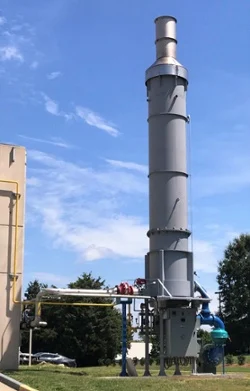
Vapor Combustion Unit (VCU) / Thermal Combustor System (TCS)
What is a Vapor Combustion Unit?
Thermal Combustor Systems (TCS) or Vapor Combustion Units (VCUs) are designed to safely burn or combust hydrocarbon vapor mixtures with varying energy content—applications where other enclosed flares may fail. The TCS combines the simplicity of an enclosed flare with the robustness and proven performance of a thermal oxidizer.
These systems offer wide flexibility and can confidently handle vent gas that may or may not be within the flammable range, providing an extraordinary level of safety compared to traditional flaring systems. Since 1969, CPI’s history in emissions abatement system design and manufacturing ensures a safe and reliable solution.
Thermal Combustor Systems are custom-designed for your specific process and can include forced draft or natural draft configurations, along with a full complement of auxiliary devices for enhanced performance and safety.
TCS Operation
The TCS operation sequence begins with purging the entire system with fresh air. After purging, the pilot and main burners are ignited and held until flame scanning safeties are satisfied. Once flame safety requirements are met, process gas can be introduced.
The system automatically adjusts to varying volumes, concentrations, and heat values of the process gas. If the process gas lacks sufficient energy to support combustion, natural gas can be added as support fuel. Introduction of process gas raises the internal combustion chamber temperature. To control temperature and facilitate combustion, fresh air is added—either naturally aspirated or forced. This combustion air ensures proper mixing, sufficient oxygen, and controlled temperature, providing optimum VOC destruction efficiency.
Key Features
All Thermal Combustor Systems feature fully enclosed flare designs that conceal the flame while thermally combusting the vapor gas stream. This enhances safety compared to exposed flame flare systems and allows installation in numerous plant areas.
- High Capacity: Process gas capacities up to 100 MMBTUH
- High Destruction Efficiency: VOC destruction up to 99.9%
- Exceptional Turndown: High volumetric turndown ratios
- Flexible Draft Options: Normally aspirated and forced draft systems available
- Automated Control: Operated via TSS control systems
- Pre-Engineered: Pre-piped and wired components for simplified installation
- Compact & Flexible: Compact design with installation flexibility
- Enclosed Flare Structure: Combines enclosed flare simplicity with robust performance
Typical Applications
- Natural gas fractionation
- Oil & gas production facilities
- Storage terminals
- Petrochemical plants
- Any application requiring safe disposal of hydrocarbon vapors with variable composition
CPI custom designs each Thermal Combustor System to match your process conditions, ensuring safe, reliable, and compliant emissions control.
评价
目前还没有评价